Bedding · Practical guide
Cotton Waterproof Mattress Protectors: What to Know Before Choosing One
A protector has a quiet job: keep moisture away from the mattress without making the bed feel like it is wrapped in plastic. The right cotton waterproof mattress protector balances a soft surface, an effective barrier, a secure fit, and care requirements that suit everyday life.
Published November 22, 2026
A spill can take seconds. The stain, odor, or damp patch it leaves behind may linger much longer—especially when liquid reaches a mattress that cannot simply be put in the washing machine. A mattress protector is a simple line of defense, but the words on the label do not tell the whole story. “Cotton” usually describes the fabric against the sleeper; “waterproof” refers to a separate layer or treatment that keeps liquid from passing through.
That distinction matters. Cotton can feel soft and breathable, while a waterproof membrane provides the moisture barrier. The two materials work together, and their construction affects how the protector feels, how it fits, and how carefully it needs to be laundered. Before choosing one, consider what you need it to protect against, which mattress it will cover, and whether the care instructions are realistic for your household.
There is no single protector suited to every bed. An adult mattress may need coverage against routine spills, perspiration, or pet-related accidents. A crib mattress calls for a product made for the dimensions and bedding practices of an infant sleep space. Understanding the differences can help narrow the field without turning a practical purchase into a guessing game.
What “cotton waterproof” actually means
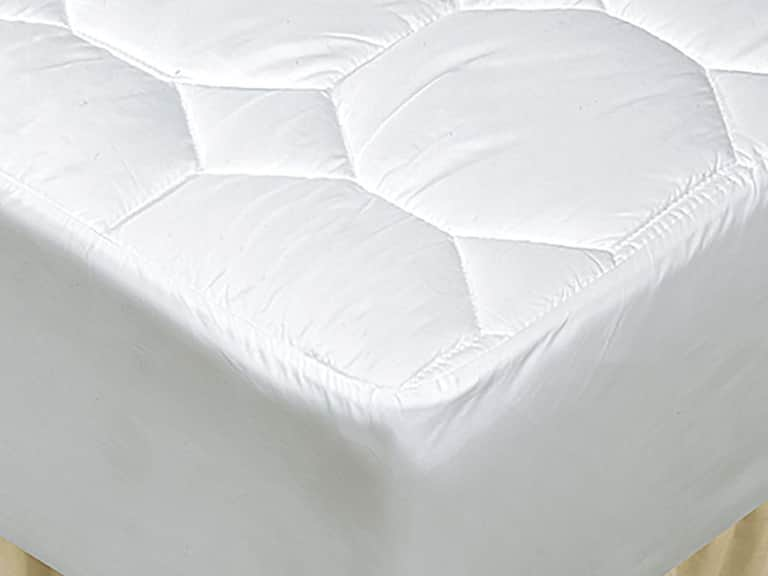
In most waterproof cotton bedding, cotton forms all or part of the fabric surface, while a thin backing or membrane blocks moisture. The cotton layer is the part that may touch the sheet or mattress; the barrier sits underneath it. Some protectors use a fitted-sheet shape, while others fully enclose the mattress with a zipper. Both approaches can provide a barrier, but they cover the mattress in different ways.
A membrane does not automatically make a protector uncomfortable. Its feel depends on its thickness, construction, and how it is joined to the fabric. A well-made protector can be quiet and flexible beneath a fitted sheet. Still, “breathable” does not mean that it behaves exactly like uncoated cotton. The barrier is there to impede liquid, and that function can influence air and moisture movement compared with an unprotected fabric surface.
Labels can also use broad terms such as “water resistant” and “waterproof.” These terms are not always interchangeable in practical use. A water-resistant surface may slow or repel small amounts of moisture, whereas a waterproof barrier is intended to stop liquid from passing through under the product’s stated conditions. Check the manufacturer’s description and care guidance rather than relying on a general impression from the product name.
Start with the job the protector must do
Before comparing fiber content or pocket depth, identify the likely exposure. A household seeking a basic safeguard from occasional spills may have different priorities from a family managing frequent nighttime accidents, a pet owner, or someone protecting a new mattress from allergens and everyday grime. More coverage can be useful, but the style should match the actual need.
- For routine spills: Look for clear information about the waterproof layer and the areas it covers. A fitted protector generally covers the sleeping surface and mattress sides, while a zippered encasement closes around the mattress.
- For broader mattress coverage: A full encasement can surround the mattress, which may be useful when protection from dust or pests is part of the goal. Check how the zipper closes and whether the product is designed to enclose the entire mattress.
- For a crib: Choose a product specifically designed for a crib mattress and follow the crib and bedding guidance provided by the mattress manufacturer and relevant child-safety authorities. Adult mattress protectors are not substitutes for nursery-specific products.
- For added cushioning: A padded mattress pad may change the bed’s feel, while a thin protector is more focused on shielding the mattress. These are related but different functions.
Protectors can reduce the chance that liquid reaches a mattress, but no textile product makes a mattress indestructible. Seams, edges, fit, wear, and laundering all affect performance. If a spill happens, remove and wash the protector as soon as the care instructions allow, and address any moisture that may have reached the mattress.
Cotton, membranes, and the feel of the bed
Cotton is valued in bedding for its familiar hand and ability to absorb moisture at the fabric surface. In a waterproof protector, the cotton cover can provide a more textile-like feel than a bare synthetic barrier. The backing is the component intended to stop liquid, so the whole construction—not the word “cotton” alone—determines how the product performs.
Some products use a waterproof polyurethane or TPU membrane. These materials are designed to form a thin moisture barrier and may be laminated between fabric layers. Other protectors use different coatings or constructions. Buyers concerned about material composition can review the full fiber and membrane details, ask the manufacturer for clarification, and look for specific certifications where relevant. A certification applies to defined criteria; it should not be treated as a blanket guarantee about every feature or use of a product.
Temperature comfort is personal and depends on more than the protector. Room conditions, pajamas, sheets, mattress materials, and the sleeper’s own preferences all contribute. A waterproof layer may alter airflow or moisture transfer compared with a bare mattress, but there is no universal promise that every cotton protector will sleep cool. If temperature is a priority, seek precise construction details and choose a product that can be returned or exchanged if its feel is not right for you.
Noise is another concern that often appears in product questions. A flexible, well-integrated membrane may be less noticeable than a stiff or poorly fitted one, but claims such as “silent” are subjective. Reviews can provide useful impressions, though they cannot guarantee the same experience on every mattress. The simplest test is to make the bed with the protector beneath the sheet and notice whether the surface feels or sounds different during normal movement.
Fit is more than mattress size
A protector labeled Queen or Twin is only a starting point. Mattress depth varies, especially with pillow-top designs, thick comfort layers, or a separate topper. Measure the mattress from the bottom edge to the highest point of its sleeping surface, including any permanent pillow top. Then compare that measurement with the protector’s stated pocket depth or maximum mattress height.
A protector that is too shallow may pull loose at the corners or strain its elastic. One that is excessively roomy can bunch beneath the sheet. Either problem may affect comfort and make the bed harder to make. Fitted designs often use elastic around the perimeter or a stretch-knit skirt to hold the protector in place; encasements rely on a closing zipper and a suitable depth range.
Pay attention to the product’s dimensions as well as its size name. Mattress sizes can vary by market, and split or adjustable beds may require separate components. For adjustable bases, confirm that the protector is compatible with the bed’s configuration and can move without shifting or restricting the mattress. If the mattress has an unusual profile, checking measurements with the manufacturer is more reliable than assuming a standard label will fit.
Adult beds and nursery bedding are not the same decision
A crib mattress pad may look like a smaller version of an adult protector, but its intended use and construction should be considered on their own terms. The product must match the crib mattress dimensions and fit securely. Nursery bedding guidance generally emphasizes a firm, flat sleep surface and a properly fitted sheet; caregivers should follow current recommendations from pediatric and public-health authorities and the crib and mattress manufacturers.
For an example of cotton layers combined with moisture protection, the Naturepedic Waterproof Organic Cotton Crib Mattress Pad is described as a flat pad with a soft organic cotton flannel top, organic cotton muslin on the underside, and a thin waterproof inner layer. Its listed dimensions are 28 by 52 inches, and its product information says it is intended to sit under a crib sheet. The description also states that it contains no vinyl/PVC, phthalates, latex, or chemical flame retardants.
Those details illustrate a design approach; they do not replace checking the product’s current instructions or confirming compatibility with a particular crib mattress. A flat pad’s placement and fit should be exactly as specified by its manufacturer. Do not add bedding layers that conflict with safe-sleep advice, and do not assume an adult protector, topper, or mattress pad is appropriate for an infant.
Care instructions can decide how long it lasts
Waterproof performance is not separate from laundry care. High heat, bleach, fabric softener, harsh detergents, or repeated washing outside the manufacturer’s instructions may affect the fabric, elastic, seams, or membrane. Before buying, read the care label and consider whether the washing and drying routine fits your home.
Some protectors are machine washable and can be tumble-dried on a specified setting; others require lower temperatures or air drying. Do not infer the right method from the word “cotton.” A cotton surface may be paired with a membrane that has different heat limits than ordinary cotton sheets. Follow the complete instructions, including any recommendations to wash before first use.
- Use the washing temperature and cycle stated by the manufacturer.
- Avoid bleach, fabric softener, or dryer sheets unless the care label permits them.
- Use the recommended dryer setting; excessive heat can damage some waterproof layers.
- Make sure the protector is fully dry before returning it to the bed.
- Inspect seams, elastic, zippers, and the membrane periodically for wear or damage.
A protector’s useful life depends on construction, frequency of washing, and household conditions. A warranty may cover specified defects, but it typically does not mean that the product will maintain identical performance forever. Keep the care instructions and warranty details, and contact the maker if the barrier appears compromised.
Certifications and material claims: read the details
Terms such as organic, non-toxic, chemical-free, and hypoallergenic appear frequently in bedding descriptions, but their meanings vary. No manufactured textile is literally free of all chemicals, and “hypoallergenic” does not guarantee that no individual will react to it. When these claims matter, look for the exact standard, the organization behind it, and the materials or stages of production it covers.
For example, a certification may concern the organic status of a textile fiber, restrictions on certain substances, or environmental and social criteria. It may not certify waterproof performance, durability, or suitability for a particular sleeping arrangement. Treat certifications as one piece of information alongside construction details, care requirements, and fit.
For buyers who want a simpler materials picture, a product page should identify the surface fabric, fill if present, waterproof component, and construction. If these are not stated clearly, ask before purchasing. Specific answers are more useful than a string of broad marketing phrases.
Protector, pad, or encasement?
Product names can blur distinctions. A mattress protector is usually a relatively thin layer intended to shield the mattress from moisture and everyday soiling. A mattress pad often adds a degree of cushioning, though some pads also include a protective barrier. An encasement surrounds the mattress, typically with a zipper, and may be chosen for more complete coverage.
There is overlap, so the name alone is not enough. A cotton mattress pad without a waterproof membrane may add comfort and absorbency but will not necessarily stop liquid from reaching the mattress. A waterproof protector may offer little extra cushioning. A zippered encasement can protect more surfaces but may take more effort to remove and wash. Read the product description to understand what it does rather than assuming every “pad” or “protector” provides the same level of protection.
For a bed that needs both a different feel and a moisture barrier, layering might seem like an easy answer. But extra layers can change the surface, affect fit, or create care complications. Check that each product is compatible with the mattress and with the other bedding layers. For a crib, avoid improvising: use only bedding arrangements that conform to current safe-sleep recommendations and the product instructions.
A practical checklist before you buy
When comparing waterproof cotton bedding, a short checklist can make the decision clearer:
- Purpose: Is the priority spill protection, a full mattress enclosure, added cushioning, or a crib-specific application?
- Materials: What is the surface fabric, and what material forms the waterproof barrier?
- Coverage: Does the design protect the top only, the top and sides, or the entire mattress?
- Measurements: Does the size and pocket depth match the mattress, including its profile?
- Care: Can it be washed and dried using the methods you can realistically follow?
- Claims: Are certifications and material statements specific and verifiable?
- Use case: Is the product designed for an adult bed, an adjustable bed, or a crib?
- Warranty: What defects are covered, for how long, and what exclusions apply?
The bottom line
A cotton waterproof mattress protector is a considered combination: a fabric surface chosen for feel, a barrier designed to block liquid, and a fit that must hold up to nightly use and regular laundering. The most useful choice is not necessarily the one with the longest list of claims. It is the one whose construction, coverage, dimensions, and care instructions match the mattress and the household’s needs.
For adult beds, begin with mattress measurements and the kind of exposure you want to guard against. For nursery bedding, select a product made for the crib mattress and follow current safe-sleep guidance and manufacturer directions closely. Cotton may make the sleeping surface feel familiar and soft; the membrane, fit, and care routine determine how well the protector performs its essential task—keeping a small accident from becoming a much larger one.